September 20th, 2023

Most parents know that routine dental care should begin during their child’s toddler years. And many assume they must wait until their child has all of his or her permanent teeth to visit Dr. Daniel Grob for an initial orthodontic consultation.
The ideal age for an orthodontic evaluation is age seven. At that age, your child will have a mixture of adult and baby teeth for Dr. Daniel Grob and our team at Valley Orthodontic Group to make a determination about whether any problems are present. Typically the first molars have come in by the time your child turns seven, giving us an opportunity to check for malocclusion, also known as “bad bite.” Also, by the time your child reaches the age of seven, the incisors have begun to come in, and problems such as crowding, deep bites, and open bites can be detected.
When Dr. Daniel Grob and our team perform an evaluation on your child at an early age, you get one of two positive outcomes. Although treatment usually will not begin until one to five years after the initial evaluation, it’s still helpful in determining whether your child has any problems with the jaw and teeth early when they are still easy to treat. Earlier treatment can also cost less to correct a potential problem than delayed treatment.
Early evaluation, of course, may signal a need for early treatment. For some children, early treatment can prevent physical and emotional trauma. Aside from spurring years of harmful teasing, misaligned teeth are also prone to injury and are detrimental to good oral hygiene.
If your child is approaching age seven, or has already surpassed his or her seventh birthday, it is time to schedule an appointment for an initial examination at Valley Orthodontic Group.
September 13th, 2023

Whether you’re heading out for a day with friends or running from classroom to volleyball practice, you don’t always have the luxury of taking care of your braces or aligners in the comfort of your home. But don’t stress! Here are some suggestions for handy items you can take with you to handle most of the dental situations that might come up.
Basic Care Kit
- Travel Toothbrush—the perfect size for quick cleanings after a meal on the go. You might want to bring a travel size tube of toothpaste as well.
- Dental Floss, Threader, and Dental Picks—you don’t want something stuck in your teeth or braces through three hours of play rehearsal.
- Water Bottle—if you don’t have time to brush, a good rinse will help keep teeth and appliances clean.
- Small Mirror—to make sure your smile is picture perfect after eating.
- Our office phone number—just in case. If something happens to your braces or aligners, or if you suffer a dental emergency, call our Peoria office immediately.
For Braces
- Orthodontic Wax—if one of your brackets is irritating your mouth, you’ll be ready.
- Braces-Friendly Snacks—soft, healthy foods that will help keep your energy up while keeping your braces intact.
For Aligners or a Retainer
- Your case! If you need to take your aligners or retainer out, use your case to protect them and keep them from getting lost. You have better things to do after lunch than sifting through a garbage can full of used napkins. Much better things.
All of these items can fit easily in a case or bag in your glove compartment, locker, or backpack. Want more tips? Talk to Dr. Daniel Grob and our team on your next visit, and let’s work together to make caring for your orthodontic appliances a quick and convenient addition to your busy schedule!
September 13th, 2023
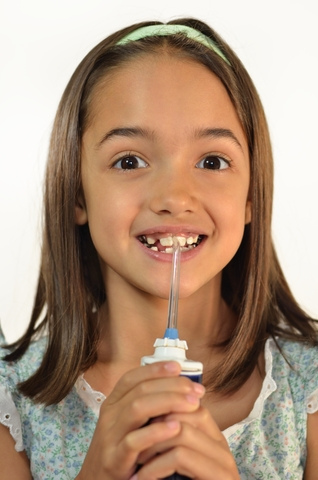
Water picks, sometimes called “oral irrigators,” make an excellent addition to your regular home care regimen of brushing and flossing. Especially helpful to those who suffer from periodontal disease and those patients of ours undergoing orthodontic treatment with full-bracketed braces, water picks use powerful tiny bursts of water to dislodge food scraps, bacteria, and other debris nestled in the crevices of your mouth. Children undergoing orthodontic treatment may find using a water pick is beneficial if their toothbrush bristles tend to get caught on their wires or brackets.
When you use a water pick, you’re not only dislodging any particles or debris and bacteria you might have missed when brushing, you are also gently massaging the gums, which helps promote blood flow in the gums and keeps them healthy. While water picks are an excellent addition to your daily fight against gingivitis and other periodontal diseases, they are incapable of fully removing plaque, which is why Dr. Daniel Grob and our team at Valley Orthodontic Group want to remind you to keep brushing and flossing every day.
If you have sensitive teeth or gums and find it uncomfortable to floss daily, water picks are a good alternative to reduce discomfort while effectively cleaning between teeth. Diabetics sometimes prefer water picks to flossing because they don't cause bleeding of the gums, which can be a problem with floss. If you have a permanent bridge, crowns, or other dental restoration, you may find that a water pick helps you keep the area around the restorations clean.
So how do you choose the right water pick?
Water picks are available for home or portable use. The home versions tend to be larger and use standard electrical outlets, while portable models use batteries. Aside from the size difference, they work in the same manner, both using pulsating water streams. A more crucial difference between water picks is the ability to adjust the pressure. Most home models will let you choose from several pressure settings, depending on how sensitive your teeth and gums are. Most portable models have only one pressure setting. If you want to use mouthwash or a dental rinse in your water pick, check the label first; some models suggest using water only.
Please give us a call at our Peoria office if you have any questions about water picks, or ask Dr. Daniel Grob during your next visit!
September 6th, 2023

Going back to school is already an exciting (and sometimes nerve-racking) time so we don't want your braces adding to that. Our Peoria team has compiled some helpful tips to make the process as easy and fun as possible.
1. Make sure you pack or purchase braces-friendly lunches
Try to avoid overly crunchy foods (think carrots, celery, hard crackers) especially if your teeth are sore from having your braces tightened. But you shouldn't stop eating healthful foods that fall in this category. For instance apples can be sliced into wedges or carrots can be cut into coins.
You should also avoid sticky foods like candy or gum that can and will stick in your braces like glue! Softer foods are easier on your teeth and braces, so aim to make a good portion of your lunch on the softer side.
2. Have a braces kit in your backpack or locker
Having some useful items on hand at school when you need them is one of the most helpful things you can do. Pack some wax for sores or tenderness, floss and/or flossing tools made for braces, a toothbrush and toothpaste, a small cup for rinsing, a small mirror to check for trapped food, and some lip balm if your lips tend to chap. With these tools on hand, you'll avoid most if not all braces-related nuisances!
3. Know that you're not alone
If you're feeling self-conscious about your braces, don't. Be proud of them! There are many other people your age who have braces, and if they don't have them now, they probably will in the future. Relax and know that you're on the path to a straighter and healthier smile.
If you have any questions about making your transition into "braceshood," just ask Dr. Daniel Grob or any member of our Peoria team! We're here to help make your braces experience (and your smile) the best it can be.