emergency care Appointment Request Virtual Exam

Our Blog

Helpful Hints for Dealing with Braces Pain

February 15th, 2023

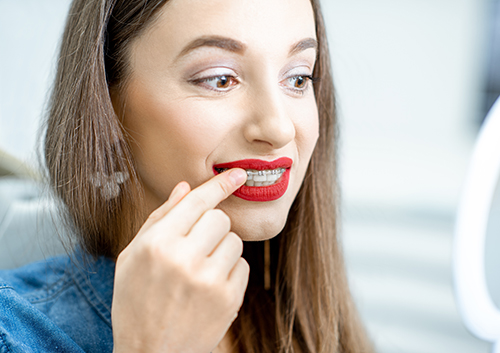
Your first few days with braces will feel rather odd, awkward, and even painful. The day you get your braces you will probably just feel weird, like you have something in your mouth – because you do. You are most likely to feel pain and soreness during the second and third days. After that, you should be fine. If you experience any pain with your braces, there are a few things you can do to get some relief.

Home Remedies

Rinsing your mouth with warm salt water will soothe it and promote healing. Rinse several times a day or when your mouth, particularly mouth sores, are hurting. You can also take some Tylenol every four hours. Dr. Daniel Grob and our team advise against products that contain ibuprofen because it slows down the movement of your teeth.

You can also eat cold foods like ice cream or yogurt. The cold of the food will help dull the pain. Ice packs applied to your mouth help as well. You can also swish ice water around your mouth, but DO NOT eat ice!

Cool Products

Products for canker sores can be applied to the mouth sores you develop from your braces. There are also various rinses you can use that act as a shield or barrier in your mouth, and protect your mouth sores from further irritation.

Dr. Daniel Grob and our team may have given you some dental wax to put on the abrasive areas of your braces to protect your mouth. Putting dental wax on the brackets creates a barrier that keeps your mouth from getting scraped and sore.

Bite wafers are another great pain relief too. When you bite down on the wafer, it increases circulation in your gums, which can ease the pain a bit. Just a little pressure will work; you don’t want to bite too hard. And they usually come in cool colors, too!

The pain won’t last forever. One day you will wake up and you won’t have any pain. In fact, you probably won’t even notice the braces in your mouth at all!

Flossing Fact or Flossing Fiction?

February 15th, 2023

Somewhere in a bathroom drawer or medicine cabinet, we all have one—that little plastic dental floss dispenser. And whether you use your floss every day (yay!), or have completely forgotten it was in there (not so good), just how much do you know about that sturdy string? Let’s find out!

  • Flossing has been around for hundreds of years.

FACT: It’s been just over two hundred years since Dr. Levi Spear Parmly, a dentist in New Orleans, suggested his patients use waxed silk thread to clean between their teeth. This is considered the first “official” invention of dental floss, although using some form of tool to get rid of food particles between the teeth has been around since prehistoric times.

  • Brushing well is the same as flossing.

FICTION: It’s really not. While brushing does a great job of cleaning food particles, plaque, and bacteria from your enamel, there are some places those bristles can’t… quite… reach. Floss was designed to clean plaque and food from between the teeth and close to the gum line where your brush doesn’t fit.

  • There’s more than one way to clean between your teeth.

FACT: Indeed there is! Not only are there many varieties of dental floss (waxed, flavored, round, flat, thick, thin, in a dispenser, attached to miniature floss wands), but you have alternatives if using any kind of floss is difficult for you. Water-flossers direct a pulsing stream of water between and around the teeth and gum line to remove food particles and plaque. Another useful alternative is the interproximal brush, a tiny little cone-shaped brush designed to remove food and plaque from those hard-to-reach spots.

  • It’s impossible to floss with braces.

FICTION: Untrue—but it can be more challenging! That’s why there are any number of flossing products designed to work with and around your braces. Stiff strands of floss which work like dental picks, floss threaders, water flossers, and interproximal/interdental brushes can both clean between your teeth and remove food particles and plaque where they collect around your braces. Dr. Daniel Grob can suggest some great options to work with your individual orthodontic treatment.

  • Flossing helps prevent gum disease.

FACT: Scientific studies haven’t provided definitive answers. But dental and periodontal associations strongly recommend daily flossing as one of the most important things you can do to prevent gum disease. Gingivitis, or mild gum disease, is caused by irritated, inflamed gum tissue. Gum tissue becomes irritated and inflamed as a response to the bacteria, plaque, and tartar that stick to your teeth. Anything you can do to help remove these irritants will reduce your risk of gum disease.

  • Flossing helps prevent cavities.

FACT: Dentists strongly recommend daily flossing to remove the food particles and plaque that lead to cavities. Brushing removes cavity-causing plaque from the outer surfaces of your teeth. But there’s a lot of enamel between your teeth as well. Flossing removes plaque from these hidden spots, helping to prevent interproximal (“between the teeth”) cavities from forming.

  • Bleeding when you floss is normal.

FICTION: Bleeding isn’t a typical reaction to flossing. Bleeding gums could be an early sign of gum disease caused by plaque and tartar buildup. On the other hand, if you floss too hard, or go too deeply below the gum line, you can make delicate gum tissue bleed. Ask Dr. Daniel Grob for tips on perfect flossing technique.

  • You need to floss after every meal.

FICTION: Dental professionals generally recommend brushing twice a day and flossing at least once each day. But this suggestion comes with some exceptions. Since you have braces, Dr. Daniel Grob might recommend flossing whenever you have a meal or snack.

  • Your dentist will never know that you haven’t been flossing.

FICTION: Nope. Sure, you can miss flossing a few times and catch up before your appointment at our Peoria office. But built-up plaque between the teeth, red, swollen, or bleeding gums, and gingivitis and interproximal cavities let both you and your dentist know that you’ve been neglecting good dental habits.

  • It’s never too late to start flossing!

FACT: Flossing is a simple, quick, and inexpensive way to maintain tooth and gum health. If you haven’t had much luck flossing in the past, ask Dr. Daniel Grob for flossing tools and techniques that will work for your specific needs. Start now, and see what a difference it will make at your next checkup!

If you had all these flossing facts at your fingertips, congratulations! But if you didn’t, no need to worry, because the real test of your knowledge is in its application. Flossing properly at least once each day will give you something far more rewarding than blog-quiz kudos—you’ll see that regular flossing rewarded with healthier teeth and gums!

Valentine Candy: Is It 4 U?

February 8th, 2023

It’s Valentine’s Day. Love and friendship are in the air, and candy is on the gift list. Are there tasty Valentine treats that are safe to eat even with your braces? We have some sweet news for you!

Safe Valentine candy, like the rest of your braces-friendly diet, won’t stick to your braces (potentially causing cavities) or damage them (potentially causing emergency visits to the orthodontist). In other words, foods that aren’t sticky, chewy, hard, or crunchy.

So, which candy treats are on the “Loves Me Not” list?

  • Chewy Candies

Love heart-shaped gummies? Or spicy cinnamon jellies? Or Valentine-pink taffy? These sweet confections might be delicious, but, no matter how delicious, all that sugar sticking to your brackets and wires is not healthy for your teeth and it’s especially hard to brush off. And the chewy nature of these treats can break wires and pull brackets loose from your enamel.

  • Hard Valentine Candies

Do U luv these? R they UR favorites? Whether or not they come in the shape of colorful hearts with clever stamped messages, as crunchy nuts surrounded by chocolate, or as gleaming red hearts on a lollipop stick, hard candies R not 4 U when you wear braces. Biting down on hard foods can damage wires and loosen brackets.

  • Boxes of Assorted Chocolates

The beauty of a heart-shaped box filled with chocolates is its variety. The problem with a heart-shaped box filled with chocolates is its variety. Any pieces with nuts, toffee, or caramel should be left in their little paper cups. Sticky, chewy, and crunchy foods are some of the worst offenders when it comes to damaging your braces. If your candy doesn’t come with descriptions, break open the piece before you indulge to see just what you’re biting into.

Is this list a bit depressing? Take heart! There are several Valentine’s options that are safe for your braces.

  • Soft Chocolates

Any kind of soft chocolate should leave your braces intact—and if you choose dark chocolate, you’ll be enjoying less sugar and more minerals and antioxidants.

  • Chocolate-Covered Peanut Butter Candies

These treats are also soft enough to be harmless to your brackets and wires. And if they’re molded into hearts? Bonus!

  • Boxes of Assorted Candies

The problem with a heart-shaped box filled with chocolates is its variety. The beauty of a heart-shaped box filled with chocolates is its variety. Nestled among all the sticky, chewy, and crunchy chocolates are the safer soft cream centers. Choose the braces-friendly options and share the rest.

Whether you’re buying a candy gift for someone in braces, or you’re the lucky giftee, choose candies that will make Valentine’s Day memorable for all the right reasons! Don’t be afraid to think out of the (heart-shaped) box—pink milkshakes or smoothies, sweetly decorated cupcakes, and creamy pastel ice creams and frozen yogurts are soft, smooth, and safe holiday treats.

Of course, after indulging in any Valentine treat, be sure to clean your teeth and braces carefully. Cavities are never fun, and especially not when you’re in braces. Brush and floss after eating, and make sure your brackets and wires are clear of any sticky, sugary souvenirs. If you do have a problem with damaged wires or brackets, be sure to call our Peoria office right away to keep your treatment plan on track. Valentine’s Day comes once a year, but your beautiful, healthy smile? You want it to last 4ever!

The Start of Valentine’s Day

February 8th, 2023

Valentine’s Day, also known as Saint Valentine’s Day, has been said to originate with a Catholic priest named Valentine several thousand year ago. Valentine defied the emperor at the time by secretly marrying men and their brides after the emperor had made it illegal to marry. Emperor Claudius II did this because he wanted as many single young men to fight in his war as he could get.

Valentine disobeyed the emperor’s edict by continuing to marry couples until he was sentenced to death. Before his execution, he sent a letter to a secret love and signed it “From your Valentine.” Dr. Daniel Grob and our team have come up with some suggestions on how you can celebrate this Valentine’s Day, whether you have a valentine of your own or not.

Valentine's Day Ideas

  • Enjoy a tasty treat. There are plenty of options when it comes to cooking and/or baking on Valentine’s Day. Make your significant other his or her favorite meal or sweet treat, or make your own favorite dish to enjoy on this day. Oh, and be sure to make enough for leftovers!
  • Make a personalized card. Instead of buying a card from the grocery store, take the time to make your own for a loved one. People love handwritten notes, especially when it’s from someone special. If you’re single this Valentine’s Day, make a card for fellow single friend to brighten the day and remind the person that he or she is also loved.
  • Watch a movie. We all know there are plenty of romance movies out there. Put on your favorite romantic comedy, or pick up your significant other’s favorite movie to watch together. Even better, if you’re single, pick up your own favorite movies to watch to pass the time this Valentine’s Day.
  • Do nothing! We all know Valentine’s Day can sometimes get a lot of hype. If you’re worried about not making a reservation in time, don’t feel like planning an extravagant night out, or simply not in the holiday mood this year, spend your day sitting back and relaxing.

Valentine’s Day is a time to celebrate love and spend quality hours with the people you care about the most. Whether you’re in a relationship or single, take some time today to appreciate those you love in your life.

We wish you a happy Valentine’s Day celebration and look forward to seeing you at our Peoria office during your next appointment.

Dr. Daniel Grob
Dr. Jason Loop
25225 N Lake Pleasant Pkwy
Suite 1240

Peoria, AZ 85383
(623) 572-2683
invisalign the clear alternative to braces invisalign for teens the clear alternative to braces member american association of orthodontists american board of orthodontics american dental association