Our Blog

How can I protect my child's teeth during sports?

November 9th, 2022

Sports are great for children for a variety of reasons. Children can develop their motor skills, learn how to solve conflicts and work together, and develop their work ethics. As a parent, you may recognize the benefits of sports, but also naturally worry about your child’s health and safety. Your job goes beyond providing a water bottle and making sure your child follows the rules of the game.

Although you may not think of your child’s teeth first when you think about sports, accidents can happen that affect your children’s teeth. A stray hockey stick, an errant basketball, or a misguided dive after a volleyball are examples of ways a child could lose a tooth. In fact, studies show that young athletes lose more than three million teeth each year.

Becoming a Better Athlete to Protect Teeth

Becoming a better athlete involves refining skills, learning the rules of the game, and being a good sport. These components are not just about winning. They are also about safety. Young athletes who are better ball-handlers and who are careful to avoid fouls and penalties are less likely to have harmful contact with the ball, teammates, or opponents. Children who are better roller-bladers are less likely to take a face plant into the blacktop, and more likely to save their teeth. Being a good sport and avoiding unnecessary contact is one way to protect teeth.

Proper Protective Equipment for Teeth

If your child is in a sport that poses a high threat to teeth, it is essential for your child to wear a mouthguard. Mouthguards fit your child’s mouth and consist of soft plastic. Dr. Daniel Grob can custom fit a mouthguard if generic ones are uncomfortable. While children may resist wearing a mouthguard initially, your persistence in insisting that they wear it should be enough to convince them. A helmet or face mask provides additional protection.

While prevention is best, rapid treatment can improve the situation if your child does happen to lose a tooth during sports. Rapid implantation can work in about ten percent of cases. To learn about ways to save a lost tooth, contact our Peoria office.

Fantastic Elastics

November 2nd, 2022

If you already wear traditional braces, you know all about these helpful little rubber rings. But if you are new to the world of braces, you might like to know just what kind of elastics are available and what they can do for you.

  • Ligatures: Alignment Assistance

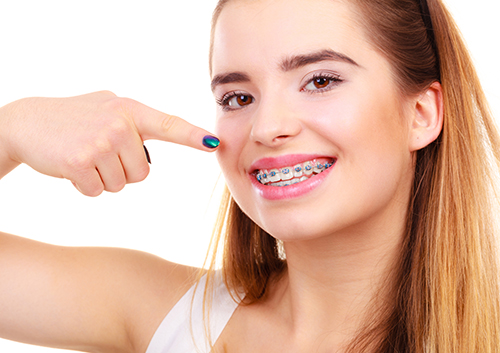
When you get your braces, the brackets you’ve chosen will be bonded to your teeth. Once they are attached securely, an arch wire will be threaded through the brackets to provide consistent gentle pressure, moving your teeth into their best positions. But what holds that wire in place? This is where those tiny, colorful bands, called ligatures, come in. Fit snugly around the wire and the bracket, they keep the wire where it needs to be to move your teeth to a better alignment.

There are also ligatures call “c-chain ligatures,” or “power chains.” These tiny ligature bands are connected to each other, and fit across the brackets in one long strip. This design lets them not only hold your wires in place, but help move your teeth closer together at the same time. They come in a variety of sizes depending on the spacing of your teeth, and might be worn weeks or months as needed.

One thing to remember is that while ligatures are essential, they are not permanent! Every time you have your wires tightened or replaced, you can make this an opportunity to express your personality through your choice of bands. There is a wide variety of color choices available, so take advantage of it!

Show your school spirit by displaying your high school’s colors. Go orange and black for Halloween. Match your ligature tones to your go-to clothing colors. Or, go monochromatic. Match grey or silver bands to your brackets, or choose white or clear bands if you have ceramic brackets. (One word of caution—light colored ligatures can pick up stains from dark foods and drinks. On the other hand, they won’t be around that long!)

  • Rubber Bands: Building Better Bites

While ligatures are the colorful attention-getters in the elastics world, there are other bands that do very important work. When you have a malocclusion, or bad bite, your upper and lower jaws don’t fit together perfectly. We use rubber bands to align your bite correctly and carefully move it into the proper position. This is accomplished by attaching bands to tiny hooks on specially chosen brackets on the upper and lower teeth. The bands usually connect an upper bracket to a lower one, and are specifically placed to correct your unique bite problem.

If you need this type of elastic, you will play a very important part in making your orthodontic treatment work. You will probably need to wear your bands 24 hours a day, removing them only for brushing and flossing. (Talk to us about how to work with your bands when you are eating, playing an instrument, or wearing a mouthguard.) And they need to be replaced several times a day, which is where you come in.

Even if the bands look perfect, after hours of work, they lose the tightness needed to keep moving your teeth to their best position. Bands that are too loose won’t be as effective. On the other hand, doubling the bands is a bad idea because that might apply too much force. Bands come in a variety of sizes and strengths, and yours have been chosen for this specific phase of your treatment. Keep calm, keep to a schedule, and keep a supply of bands on hand in case one breaks, and everything will work out.

If this sounds like a lot of confusing information, don’t worry! Dr. Daniel Grob will supply you with the right bands for your treatment, clear instructions on where and how to place them, and practice time for putting them in. You’ll probably need a mirror at first, but you’ll become an expert in no time.

If you ever have questions we can help you with, contact our Peoria office immediately. We are here to guide you through the process and help you with any problems you might have. Wearing your bands consistently and correctly will help you achieve your beautiful smile in the shortest time possible. And that’s an accomplishment that is truly fantastic!

Halloween: Candy, costumes, and more!

October 26th, 2022

All Hallows' Eve, more commonly known as Halloween, is a yearly event celebrated on October 31, and one that is anticipated by the young and young at heart all over the world. Some scholars claim that Halloween originated from Celtic festivals that honored the dead or that celebrated the harvest, while others doubt that there's any connection at all to Samhain (a Gaelic harvest festival.) Regardless of its origin, our team at the Orthodontic office of Dr. Daniel Grob hopes that Halloween is fun and enjoyed by all of our awesome patients!

Trick or treat?

In North America, Halloween is predominantly celebrated by children who dress up in costumes, which range from scary to cute, who then go around the neighborhood knocking on doors asking "trick or treat", and they are given candy in return. Trick-or-treating is a time honored tradition, and though many parents groan at the pounds and pounds of candy collected by youngsters and fear for the health of their teeth, there are a few things you can do to help their teeth stay in great shape until the candy is gone:

  • Limit the amount of candy they can consume each day
  • Have them brush their teeth after eating candy
  • Avoid hard, chewy candies as they can stick in hard to brush places
  • Keep candy out of sight to reduce temptation
  • Don't buy candy too far in advance to limit pre-Halloween consumption
  • Help or encourage your children to floss

Halloween Fun

Halloween isn't just about gorging on candy; there are other events associated with this festive day including carving jack-o'-lanterns, painting pumpkins, decorating sugar cookies, bobbing for apples, going to haunted houses, or just curling up on the couch with a bowl full of popcorn and watching some classic, scary movies.

Halloween Around the World

Some countries, like Australia, frown upon Halloween, claiming it is an American event and not based in Australian culture, while others like Italy have embraced the fun and celebrate much as Canadians and Americans do. Mexicans have been celebrating this fun day since around 1960, and it marks the beginning of the Day of the Dead festival. Some countries in Europe have come late to the party, but since the 1990s, countries like Sweden, Norway, and Germany have started celebrating Halloween as well, and finding children in costumes or having ghosts hanging in windows has become commonplace.

Halloween is about fun; stepping outside our normal lives and donning a costume or gathering with friends to knock on doors and ask for candy is as much a part of our culture as hot dogs and barbecue on Labor Day. Have a safe and happy Halloween from the team at Valley Orthodontic Group!

How to Floss with Braces

October 19th, 2022

The Valley Orthodontic Group team knows that oral hygiene is important, whether you have braces on your teeth or not. But if you are a person who wears braces, caring for your teeth and gums can become somewhat challenging. Without daily oral hygiene practices, you may become prone to cavities and tooth decay during your time in braces.

Naturally, you know that brushing your teeth each morning and night, as well as after you eat, will help keep your mouth healthy and clean during the months you wear braces. But flossing is also an important part of your hygiene routine. Flossing with braces can be tricky, but it’s not impossible. Dr. Daniel Grob, your general dentist, or your dental hygienist can help you become more comfortable and adept at flossing your teeth during the months you wear braces.

Flossing Tips for Those with Braces

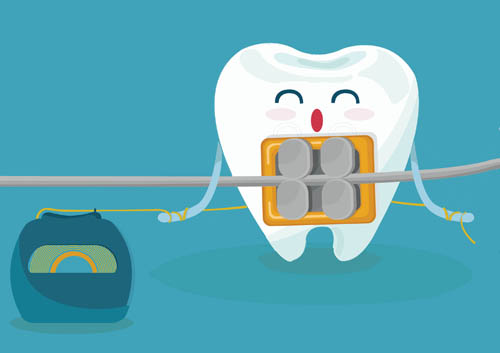
  • Use Tools Provided by Our Office. A floss threader is a small, plastic needle that will help you floss between the wires and your teeth. Thread a 12-to-18-inch piece of floss onto the needle, and use the needle to get the floss easily behind the wires.
  • Flossing Under the Wires. Once the floss is behind the wires, use your hands to manipulate the floss. Move it up and down along the wires to remove food particles.
  • Flossing Between Your Teeth. Floss between your teeth as you normally would without braces. Move the floss up and down between your teeth, using a clean section of floss for each tooth.
  • After You Finish Flossing. Your orthodontist may have suggested that you use a water pik or proxy brush after you finish brushing. Either of these tools will help remove any loosened food particles to ensure that your teeth and braces are clean.

Continue Good Oral Hygiene Habits

Good oral hygiene habits you use while wearing braces will help you achieve the beautiful smile you and the Valley Orthodontic Group team have been working toward. Once your braces are off, it may be tempting to slack off on the brushing and flossing. Don’t let yourself fall into any habits that will have a negative impact on your oral health or the attractive smile you waited for throughout the months you wore braces. See your general dentist for regular cleanings, and continue to brush and floss your teeth each day.

Dr. Daniel Grob
Dr. Jason Loop
25225 N Lake Pleasant Pkwy
Suite 1240

Peoria, AZ 85383
(623) 572-2683
invisalign the clear alternative to braces invisalign for teens the clear alternative to braces member american association of orthodontists american board of orthodontics american dental association