September 22nd, 2021

The purpose of braces and other forms of orthodontic treatment at Valley Orthodontic Group is to correct malocclusion, also known as crooked or crowded teeth, or “bad bites.” Past orthodontic practice dictated that wisdom teeth be removed, especially in cases of crowding.
The wisdom teeth are the last teeth to come in, and are officially known as the third molars. The teeth typically erupt, or break the surface of the skin, in young people between the ages of 13 and 20.
Sometimes, wisdom teeth are impacted. That means they cannot break through the gum tissue. This typically happens when the mouth or jaw is too small to accommodate the teeth. Impacted wisdom teeth can become infected, and some dentists and orthodontists may want to remove them as prophylaxis to prevent possible future infection.
Justification for removing wisdom teeth
Dr. Daniel Grob will tell you that in some cases, wisdom teeth attempt to come in the wrong way, either tilting in the jaw, or sideways. If the mouth is too small to accommodate these additional teeth, they inevitably become impacted. Swelling or infection of the gum flap above an impacted wisdom tooth may cause pain. The greatest danger is pericoronitis, a potentially dangerous infection that can occur in the gum area around an impacted wisdom tooth, or around a wisdom tooth that has erupted.
Orthodontists base their decision to remove wisdom teeth on each patient's individual circumstances. To learn more about the impact wisdom teeth have on orthodontic treatment, or to schedule a visit with Dr. Daniel Grob, please give us a call at our convenient Peoria office!
September 15th, 2021
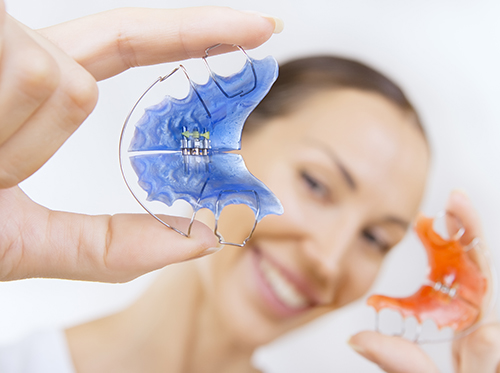
Many patients underestimate the importance of wearing their retainers after their braces come off, but it is one of the most critical post care practices to keep your teeth in alignment. Why spend all that time, energy, and money to straighten your teeth when you don't plan to keep them straightened after treatment?
What is a retainer?
As the name implies, a retainer keeps teeth from moving back to the positions in which they started before treatment was administered; they "retain" your smile and bite. There are many different types of retainers—some are removable and some are permanent. Some retainers are made of plastic and metal (known as Hawley retainers) and others are all plastic or all metal. Some retainers can even be bonded to the back of your teeth!
How long do I need to wear it?
If you've been given a removable retainer by Dr. Daniel Grob, you may be wondering how long you need to wear it. It takes time for the tissues and bones around your teeth to reorganize and set into place after braces treatment.
The amount of time you’ll need to wear your retainer depends on your unique situation, but typically, retainers should be worn at least as long as the time you spent in braces. You might need to wear them full-time for a while, and then transition to wearing them only at night. Dr. Daniel Grob will have a treatment plan especially for you, and if you stick to it, you'll always have a straight smile.
Nothing is forever (at least without retainers!)
Research has shown that there is no “permanent” position for your teeth to remain in. In fact, some studies say upward of 70% of patients will see a change to their bite and tooth alignment as they get older. This applies to people who have had orthodontic treatment and those who have not. Of course, some people's teeth never seem to shift—you can consider them the lucky ones, as most people's teeth do.
And this is precisely where retainers come in. The only way to ensure your teeth stay in alignment long-term is by wearing your retainers. If you have any questions about retainers or your treatment plan, please ask any member of our Peoria staff.
September 8th, 2021

Thanks for asking! It really depends on the dental age of the patient rather than their chronological age. Usually a good time to have your child evaluated by an orthodontist is after the front permanent teeth have erupted into the mouth or if there appears to be extreme crowding of the teeth.
The American Association of Orthodontists recommends that children between the ages of seven and nine should be evaluated by an orthodontist. There are times when an early developmental treatment is indicated to correct situations before they become major problems. In these circumstances the patient will most likely benefit from a second phase of orthodontics when all of their permanent teeth have erupted.
Most full orthodontic treatment begins between ages nine and 14, and lasts from one to three years, with two years being the average. It’s important, however, that children be screened at an early age for Dr. Daniel Grob and our staff to assess if your child can benefit from orthodontic treatment and when treatment should begin.
We hope this helps, and invite you to give us a call if you have any questions about your child’s treatment at Valley Orthodontic Group.
September 1st, 2021

Labor Day honors the contributions that workers have made to this country, and for many Americans, the holiday is a great time to relax at home with family and friends. But there are quite a few people who celebrate the holiday by getting out of town, with an estimated 33 million people traveling more than 50 miles over Labor Day weekend each year. If you’re dreaming of a great Labor Day escape but you’re not quite sure where to go, here are a few ideas from our team at Valley Orthodontic Group to give you some travel inspiration.
Explore a National Park
On a national holiday like Labor Day, it’s only fitting to experience the beauty of America’s landscapes by heading to the nearest national park. If you’re confined to an office most days of the year, national parks can provide a relaxing and scenic escape, whether you’re by yourself, traveling with a group of friends, or bringing the whole family along. Depending on how close you live to the nearest park, you can stay for an afternoon or for longer than a week. With 58 parks located in 27 states, there are plenty of beautiful areas to choose from.
Chow Down in a BBQ Haven
Barbecuing is a popular Labor Day activity, but instead of sweating over your own grill or oven, try visiting one of the country’s BBQ capitals. U.S. News and World Report names Memphis as the top BBQ destination, with more than 80 BBQ restaurants in the city, most notably Corky’s BBQ and Central BBQ. Kansas City is also known for the sweet taste of its sauces, while central Texas is said to have perfected the technique of smoking tender and flavorful brisket.
Relax on the Beach
Many people think of Labor Day as the unofficial start of fall, which brings cooler temperatures, more rain, and for many people, an end to lazy days at the beach. End your beach days with a bang by taking a trip to one of the coasts or to a lakeside beach. For an added dose of festivity, find a city or town that celebrates the occasion with a fireworks display over the water.
Whether you’re looking to turn your getaway into a full week affair or you simply want to experience a quick escape, make the most of your holiday by changing your surrounding scenery. Happy Labor Day from the Orthodontic practice of Dr. Daniel Grob!