
Our Blog

What is hyperdontia?

April 14th, 2021

When a child is born, he or she will have 20 primary teeth and 32 permanent teeth. But sometimes kids are born with additional teeth, and our team at Valley Orthodontic Group calls this oral condition "hyperdontia." Primary teeth are the first set of teeth that erupt in your child's mouth, typically by the time they are 36 months old, and are shed by the time your child reaches the age of 12. Permanent teeth then take the place of the primary teeth and are usually fully-erupted by the time your son or daughter reaches 21 years of age. Anyone who develops more than 20 primary teeth or more than 32 permanent teeth has hyperdontia, and the additional teeth are referred to as supernumerary teeth.

While the cause of hyperdontia is not entirely clear, it is believed that there may be a genetic factor. Oral professionals have found that patients with extra teeth often have syndromes like cleidocranial dysplasia, Ehler-Danlos syndrome, Gardner syndrome, or cleft lip and palate. The prevalence of hyperdontia affects between one and four percent of the population in the United States, and the majority of cases are limited to a single tooth.

So, what is the best way to deal with hyperdontia? It really depends on the case. The treatment plan your doctor suggests varies according to the potential problem posed by the supernumerary teeth, as well as their type. Orthodontic treatment may certainly may help, but extraction can also be a good option. We recommend that children receive an oral evaluation or checkup no later than the age of seven. In addition to hygiene evaluation, this helps ensure your child does not experience hyperdontia problems.

If you suspect you or your child may be suffering from hyperdontia, please give us a call to schedule an appointment at our convenient Peoria office to be evaluated.
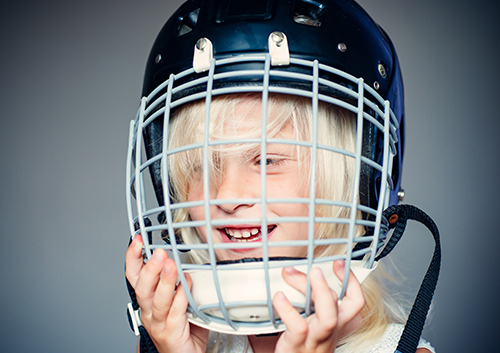

This April, Let’s Celebrate National Facial Protection Month!

April 7th, 2021

Poor April. While other months celebrate romance, or giving thanks, or costumes and candy, April has—April Fool’s Day and a tax deadline. We might be forgiven for thinking these two dates seem more like warnings than celebrations.

So here’s a new topic for the April calendar: National Facial Protection Month! Take the opportunity this month to review your safety practices while you’re enjoying your favorite activities.

  • Mouthguards

If you have a mouthguard for sports or athletic activities, wear it! In any activity or sport where humans come into contact with solid objects (including other humans) tooth injury is possible. A mouthguard will help protect you from dental injuries caused by falls, physical contact, or other accidents that might happen in your active life. And it’s not just your teeth—mouthguards protect your lips, tongue, and jaw as well.

You can buy mouthguards in stock sizes or shape-to-fit models, or you can have a guard made especially for you at our Peoria office. Custom mouthguards fit perfectly and are designed to make breathing and speaking easy and comfortable. If you wear braces, a custom mouthguard can be designed to protect your smile and your appliance. Just talk to Dr. Daniel Grob for suggestions!

After all the time and work you’ve put into your orthodontic care, don’t let a sports injury set you back. What else should you consider for your facial protection?

  • Helmets

If there’s a helmet available for your sport, use it! Helmets are especially important for protecting athletes from brain injury and concussion, and they help protect the face and jaw as well.

  • Face Guards

If you’ve experienced a puck speeding toward you, or a defensive tackle hurtling your way, or a fast ball coming in at 90 miles an hour, you know the importance of wearing a face guard. These guards can help protect your eyes, face, teeth, and jaws. Many sports now recommend using face guards—it’s worth checking to see if your sport is one of them.

  • Eye Protection

And let’s not forget eye protection. Whether it’s safety glasses or a visor, protecting your eyes and the bones around them is extremely important. You can even get sports goggles or protective sports glasses with prescription lenses to keep you safe and seeing clearly.

So here are a few suggestions for your calendar this month:

  • If you haven’t gotten a mouthguard yet, now’s the time. Tooth and mouth injuries occur in sports beyond hockey and football. If you play basketball, ski, skateboard, ride a bike—in fact, almost any sport where you can fall or make contact with a person or object—a mouthguard is a must.
  • If you need to replace an ill-fitting or damaged helmet and face guard, do it before your next game. And do replace a bike helmet if you’ve been in a crash—most likely it won’t be as protective, even if damage isn’t visible.
  • Talk to your eye doctor about protective eyewear if off-the-rack products don’t work for you.
  • If you are a parent or caregiver, make sure your child athlete has the proper facial protection—and uses it.
  • If you are a coach, make sure your athletes have the right protective gear—and wear it.
  • It’s also a great time to commit to using your protective gear every single time you’re active.

But, wait—these reminders are helpful and important, but weren’t we promised something to celebrate this April? Good catch! The great news is, using facial protection for sports and athletic activities gives you rewards you can celebrate all year: fewer injuries, fewer visits to the emergency room, and a beautiful, healthy, intact smile. Suit up!

Just Add Water

March 31st, 2021

One of the many benefits of your clear aligners is that you can remove them to eat. You should brush after every meal, just like you would with traditional braces, but cleaning your teeth is much easier without having to work around and between brackets and wires.

But when you wear your aligners 22 hours a day, you might be tempted to leave them in when you’re just having a sip of something when you’re thirsty. Unless you’re drinking water, please don’t.

What’s the problem with a can of cola or a cup of coffee?

  • Staining

The virtue of your clear aligners is that they are, well, clear! Probably one of the reasons you decided on this method of treatment was because you liked the idea of an inconspicuous appliance.  Unfortunately, dark beverages such as colas, coffee, tea, and red wine can stain your aligner, making it more visible.

  • Warping

Very hot beverages might actually affect the shape of your aligners. Since they are formed using heat, it makes sense that heat can also de-form them. If hot teas and coffee drinks cause a change in the shape of your aligners, they will not move your teeth the way they were meant to.

  • Affecting Tooth Health

Even though our enamel is very strong, sugary and acidic drinks can damage it. Acidic foods can erode enamel, and the sugars in our diet provide food for cavity-causing bacteria, which then produce acids that erode enamel.

Normally, saliva provides some protection from acids and sugars by diluting them and washing them away from the teeth. When you drink a cola or an orange juice with your aligners on, some of the liquid will get in them, and can stay in them until the aligners are removed. You will actually give these problem beverages the opportunity to bathe your teeth in sugar and acid over a longer period of time, without exposure to saliva to help offset potential harm. And after all your work to create a beautiful smile, you certainly don’t want new cavities!

How to protect your aligners and keep them their cleanest—and most invisible?

  • Take your aligners out before drinking beverages that can stain them, or, if you can’t, try using a straw. Clean your aligners according to Dr. Daniel Grob and our team’s instructions to keep them as clear as possible.
  • Don’t drink very hot beverages with your aligners in place. Try icing your coffee and tea if you can’t remove your aligners. And if you think your aligners have changed shape, please give us a call.
  • Drink water! Water hydrates you, doesn’t damage enamel, and keeps your aligners clean. Tap water is your best option, as even bottled waters can be acidic.

If your aligners should become stained, remember that you change them frequently, so the staining can be a temporary problem. If you do have a drink of something hot and your aligners feel “off,” give our Peoria office a call. We’ll let you know if you need to replace them.

But prevention is always best! Avoid staining from the start by removing your aligners before you drink dark beverages. Don’t expose your aligners to heat. Think about replacing unhealthy drinks with water. And certainly brush right away, or rinse with water if that’s not possible, if you drink a sugary or acidic beverage. These simple precautions will help keep your aligners, and, most important, your teeth, looking their best.

I got my braces. Now what?

March 24th, 2021

You’ve taken the first step toward a healthier and more beautiful appearance by getting braces at Valley Orthodontic Group, and you’re probably wondering what comes next. The first week is the period of biggest adjustment, and there’s a lot to learn in this short time. Don’t worry; in a few short days your braces will feel completely natural.

The first week

On the first day, your braces will probably feel very odd in your mouth; it will take time to get used to them. By the second day, you may feel some soreness or pain. If you are going to experience any pain, the second and third days are when it will happen. Most pain can be dealt with by taking an over-the-counter pain reliever, such as Tylenol.

What about sore spots?

Your cheeks and tongue are getting used to your new braces, just like your teeth are. You may develop sore spots where this soft tissue rubs against the harsh metal of your braces. The best way to avoid this and allow your mouth to heal is by covering the metal spot with orthodontic wax. Break off a small piece and roll it into a ball in your hands. Dry the metal of the braces with a cotton swab, then wrap the wax around the sharp spot to create a cushion.

What if they break?

Braces are held onto your teeth with special orthodontic glue. Once in a great while, part of your appliance may come loose from the surface of a tooth. This won’t harm anything; it will just be slightly inconvenient. Call our office right away and we will be able to glue the bracket back on.

Make sure you avoid hard items such as ice, brittle, and other hard candies, and don’t open packages with your teeth. These habits can contribute to braces popping off. Even fairly innocent-sounding items like popcorn or French bread can be a culprit, so avoid eating any hard foods, or cut them up into small pieces before consuming.

If you have questions about which foods to eat and avoid, or if your braces are more sore than expected, feel free to contact our Peoria office and ask Dr. Daniel Grob and our team. We’re more than happy to help!

Dr. Daniel Grob
Dr. Jason Loop
25225 N Lake Pleasant Pkwy
Suite 1240

Peoria, AZ 85383
(623) 572-2683
invisalign the clear alternative to braces invisalign for teens the clear alternative to braces member american association of orthodontists american board of orthodontics american dental association