
Our Blog

Go Green for St. Patrick’s Day

March 17th, 2021

Millions of people, around Peoria and beyond, wear green on St. Patrick’s Day so they can show their spirit for the holiday and avoid getting pinched. While it may be easy for you to throw on a green shirt, sport a St. Patrick’s Day button, or wear a pair of emerald-hued shoes, if you’re an avid St. Patty’s Day enthusiast you may want to try something different this year. Dr. Daniel Grob thought of a few ideas that will help you take your holiday spirit to the next level:

Visit Chicago’s Green River

If you happen to be near the Windy City during St. Patrick’s Day or you’re thinking of planning a trip, don’t miss out on going downtown to watch the large-scale celebration that kicks off when the city dyes the river bright green. According to the Chicago Sun-Times, Chicago has been celebrating the holiday with this tradition for more than 50 years, with tens of thousands of people gathering annually to witness the mysterious dying process and the stunning result.

Don Green Face Paint

Just like an avid sports fan on game day, you can use green face paints to showcase your enthusiasm for this holiday. Avoid breakouts or allergic reactions by only using paints that are specifically meant to be applied to the skin. A little bit of face paint can cover a large area, so feel free to get creative and decorate the whole family on St. Patrick’s Day.

Eat Green All Day

Not a fan of green eggs and ham? With the increasing popularity of green smoothies, there’s no better time to get in on this health craze. To create a green smoothie without the aid of food coloring, you can simply blend a generous amount of a leafy green vegetable, such as spinach or kale, with the ingredients that you would typically use to make a smoothie, like fruit, ice, milk, or juice. Keep the trend going throughout the day by using those same vegetables to create a green soup, egg salad, or a batch of bright green pastries. As an added bonus, you’ll get a healthy dose of vitamins without changing the taste of most of these foods.

If your old holiday routine has gotten stale, leave your green T-shirt in the drawer and try one or all of these tips. Don’t be surprised if you have so much fun that you decide to start a new, annual St. Patrick’s Day tradition! Have a happy St. Paddy’s day from Valley Orthodontic Group!
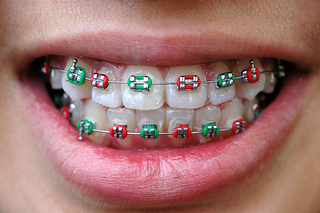

What role do elastics (rubber bands) play in orthodontics?

March 10th, 2021

Wearing orthodontic braces may be the best choice for correcting your teeth and improving your smile, and that's why you've come to see Dr. Daniel Grob at Valley Orthodontic Group. Braces, which consist of brackets and wires, work by gently applying pressure to the teeth, and that pressure causes them to move into the correct position. In some cases elastics, or rubber bands, are used to apply additional pressure needed to move your teeth.

The Purpose of Elastics

Customized for each patient, the rubber bands typically stretch over tiny loops on the top and bottom brackets. If worn consistently, and every day, these tiny elastics will apply the steady pressure needed to guide your teeth into the correct position.

These elastics are crafted from medical-grade latex, which is safe to be in contact with your mouth. It's common to remove the elastics during meals if opening your mouth wide enough to eat is difficult. Our staff will demonstrate how to affix the elastics so it will soon become second nature to replace them.

The Do’s and the Don'ts

DO - Get in the habit of carrying around extra rubber bands and replace them as soon as one breaks. By consistently wearing the elastics, you may shorten the overall time needed to wear braces.

DON'T - Double up on elastics as this will cause too much pressure on the tooth or teeth and can actually harm the root of the tooth.

DO - Always wash your hands before removing or replacing the rubber bands.

DON'T - Overstretch the rubber band or it will lose its strength and it will be ineffective.

DO - Call us if you run out of rubber bands.

DO - Have fun with your braces and elastics. There are many different colors available that can let you show off your soon-to-be perfect smile.

Rubber bands are a key part of your orthodontic treatment, and learning how to remove and replace them is an important part to maintaining your braces. Before we set you on your journey to a perfect smile, we'll make sure you understand all there is to know about how to take care of your braces. Of course, if you have any questions about your orthodontic treatment, or orthodontics in general, be sure to contact our Peoria office, and our staff will be happy to assist you!

Make Your Braces Bands Work for You!

March 3rd, 2021

Well, of course, they already are working for you—as an essential part of the alignment process. Rubber bands, also known as elastic ligatures, are used to secure the wires inside your brackets. But bands can be more than functional. Since the ligatures around each bracket are replaced when you visit our office, why not use that opportunity to choose a new color scheme as well?

  • Make a Statement

Bands offer a chance to coordinate your braces to an interest, team, or event. Are you a swimmer? Maybe cool blues and turquoises appeal to you. Batman forever? Black and yellow. (That will work for beekeepers, too.) Have a favorite sports team? Choosing team colors will support your team with every smile. Love your school? Show your spirit by wearing bands in your school colors. Favorite time of year? Celebrate by selecting festive bands in holiday colors.

  • Suit Your Mood

Fiery reds and oranges, tranquil blues and greens, millennial purples and pinks, or exuberant neon—you know that there are just some colors that suit your personality. Showcase that personality with your choice of band color. And if your mood changes, choose shades that express a completely different side of you.

  • Coordinate Your Colors

Match your bands to your eye color, your makeup, or the clothing colors you choose most often. If there’s a color profile that works for you, make your bands a part of it. If you don’t want everything matching, complement your coloring or clothing with a different but coordinating shade for a cohesive effect.

  • Keep a Low Profile

Most adults will stick with a monochromatic set of bands, and this might be a look that appeals to you as well. Grey and silver bands will blend nicely with silver braces. If you have clear or white brackets, you might want to test out which bands will be least noticeable. Clear bands can become discolored, and white bands can make teeth look darker. If there’s a band which mimics your own tooth color, this will be the choice for you.

  • Make Color Theory Work for You

Certain colors and tints bring out the best in your tooth color and work with your skin tones. White and yellow bands might make teeth appear duller, and any shade combination that resembles food particles (greens, browns, and black) is probably not a look you’re going for. Have fun with a color wheel and decide which colors you find most flattering.

Make your bands more than a tool—make them an accessory. There are so many colorful options available that you are bound to happen on a color scheme that just suits you. And if you change your mind? Change it up during your next visit to our Peoria office!

The Truth about TMJ

February 24th, 2021

TMJ is the quick way of referring to your Temporomandibular Joint. Pardon the pun, but that’s quite a mouthful! What is this joint, what does it do, and, if your Dr. Daniel Grob and our team have told you that you have a TMJ disorder, what can we do to help?

The Temporomandibular Joint

Your two temporomandibular joints are amazing works of anatomical design. These are the joints where the temporal bone in the skull meets the mandible bone of the jaw, and allow our mouths to open and close, move back and forth, and slide from side to side. Muscle, bone, and cartilage work together to provide easy movement and to cushion the joint. But sometimes, the joint doesn’t work as smoothly as it should, and this can lead to Temporomandibular Joint Disorder, or TMD.

When Should You Suspect You Have TMD?

You might have TMD if you experience any of these symptoms:

  • Painful chewing
  • Pain around your TMJ, or in your face or neck
  • Earaches
  • Changes in your bite
  • Jaws that are limited in movement or lock open or shut
  • Clicking, popping or grating noises when you open and shut your jaw

There are many conditions linked to TMD. If you grind your teeth at night, have arthritis in the jaw, have suffered an injury or infection in the area, or have problems with your bite, for example, you might be more likely to have TMJ problems. If you suspect you have TMD, or suffer from any of the symptoms listed above for an extended period, give us a call.

Treating TMD

During your visit to our Peoria office, we will check your medical history, and examine your head and neck. We can take an X-ray or scan if needed for further examination of the joint. Because there is no real scientific agreement yet about the best way to treat TMJ disorders, a conservative treatment plan is often best. If you do show signs of TMD, we might first suggest relaxation techniques, over-the-counter pain relievers, or the use of ice packs or moist heat compresses. A change to a softer diet can help, and you should stop chewing gum and making any exaggerated jaw movements.

If these self-care practices aren’t effective, we might suggest a nightguard. This appliance is a comfortable and flexible mouthguard custom fitted for you, and will bring relief from teeth grinding when worn at night. If this treatment is not effective, talk to us about other options.

Luckily, most cases of TMD are temporary and don’t become worse over time. But any persistent discomfort is a good reason to visit us. Whether you have TMD, or any other problem causing you pain in the head or jaw, we want to help.

Dr. Daniel Grob
Dr. Jason Loop
25225 N Lake Pleasant Pkwy
Suite 1240

Peoria, AZ 85383
(623) 572-2683
invisalign the clear alternative to braces invisalign for teens the clear alternative to braces member american association of orthodontists american board of orthodontics american dental association